
Let's just go ahead and say it: fundraising is rough right now.
If you work at a nonprofit, you may feel like you’re perpetually stuck in fundraising mode: chasing the next gift, the next campaign, the next short-term fix just to keep things moving. Instead of building stability, many organizations are reacting to funding gaps and living campaign to campaign.
You’re not alone. Across the sector, nonprofit leaders are navigating donor fatigue, rising costs, fewer public dollars, and constant pressure to “just keep going.”
But here’s the mindset shift that changes everything:
Fundraising alone doesn’t create resilience. Funding does.
In a recent conversation, Lynne Wester, Founder of Donor Relations Group, joined Karen Houghton, CEO and co-founder of Infinite Giving, to unpack what’s really happening behind the scenes of nonprofit fundraising and donor relationships.
Rather than focusing on abstract “best practices,” the conversation centers on real-world dynamics, especially the subtle ways scarcity thinking undermines donor trust and internal confidence.
Together, they explore how scarcity shows up in:
- Donor communications that feel rushed or transactional
- Stewardship practices that fall by the wayside
- Financial decisions made under pressure
- Unspoken signals nonprofits send when they’re anxious about money
Why So Many Nonprofits Are Stuck in Fundraising Mode
When resources feel uncertain, scarcity thinking quietly takes over. Decisions become reactive. Urgency replaces strategy. And over time, that pressure shows up in ways nonprofits don’t always recognize.
Scarcity-driven organizations often:
- Communicate with donors from a place of urgency or fear
- Prioritize short-term revenue over long-term trust
- Delay stewardship because “there’s no time” to explore other options
- Make financial decisions based on what’s immediately available, not what’s sustainable
While this approach may keep an organization operating in the short term, it rarely builds the financial confidence needed to support a mission over time.
Fundraising can keep you moving. Funding is what helps you last.
The Difference Between Fundraising and Funding
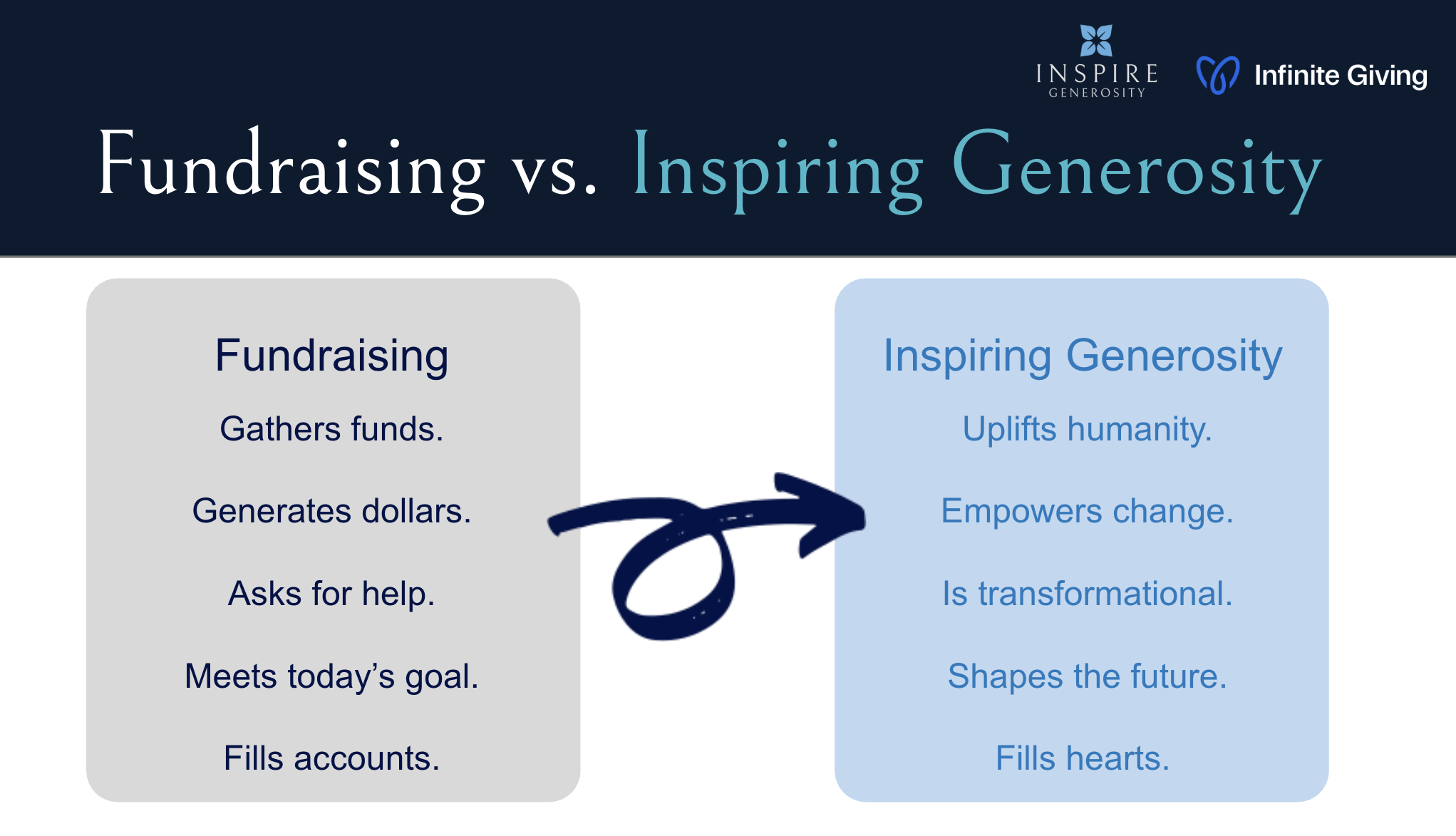
Fundraising is about activity: appeals, campaigns, events, and asks.
Funding is about infrastructure, alignment, and trust.
A funding mindset allows nonprofits to:
- Help build financial flexibility and reserves
- Align donor experience with financial strategy
- Make clearer, more confident leadership decisions
- Steward donors as long-term partners, not transactions
Funding isn’t about doing less fundraising. It’s about ensuring fundraising is supported by strategy, stewardship, and financial clarity.
Why Donor Trust Is the Foundation of Funding
Funding is built on trust.
Donors don’t want to feel pressured. They don’t want to be treated like transactions. And they don’t want to hear from organizations only when there’s a shortfall.
What donors want is clarity, confidence, and honesty.
When nonprofits move from reactive fundraising to intentional funding, that’s when donor relationships deepen, conversations around giving become more grounded, and true stewardship starts to take shape.
And the best part: leadership teams gain financial confidence.
This is where the concept of Giving Partners comes into play. Donors who are treated as long-term partners and invited into the mission, rather than pushed toward urgency, are far more likely to stay engaged over time.

Aligning Stewardship and Financial Strategy
One of the most overlooked challenges nonprofits face is the disconnect between donor experience and financial strategy.
Stewardship often lives with development teams. Financial planning lives with finance committees or leadership. When those functions aren’t aligned, organizations unintentionally send mixed signals, both to donors and to themselves.
A funding mindset bridges that gap by:
- Connecting donor trust with financial planning
- Treating stewardship as a strategic function, not an afterthought
- Ensuring generosity supports long-term mission health, not just short-term needs
When donor relationships and financial strategy work together, nonprofits move out of survival mode and into stability.
What a Funding Mindset Makes Possible
Shifting from fundraising to funding doesn’t happen overnight, but it creates meaningful momentum.
A funding mindset helps nonprofit leaders:
- Recognize the difference between fundraising and funding (and why it matters)
- Break out of scarcity-driven behaviors that erode trust
- Build values-aligned relationships with donors
- Create conversations about generosity without pressure or fear
- Make financial decisions with greater clarity and confidence
Instead of asking, “How do we get through this moment?” leaders begin asking, “What does financial health look like for our mission long term?”
Building Confidence for the Road Ahead
The past few years have been daunting for nonprofits, and many organizations are still finding their footing. This conversation, and this shift in mindset, is not about ignoring reality but responding to it differently.
Funding is about slowing down just enough to get clear. About stewarding the resources you already have. About building trust that holds up over time, and not just in moments of crisis.
As you look ahead to the years to come, consider this reframe:
Fundraising keeps you going. Funding is what helps you last.
When nonprofits align donor trust with financial confidence, they don’t just survive, they build the resilience their mission deserves.

DISCLOSURE
Infinite Giving Advisory Services, Inc. is an SEC-registered investment adviser. Advisory services are only offered to clients or prospective clients where Infinite Giving Advisory Services, Inc. and its representatives are properly licensed or exempt from licensure.
This content is solely for informational purposes. Past performance is no guarantee of future returns. Individualized responses to persons that involve either the effecting of transactions in securities, or the rendering of personalized investment advice for compensation, will not be made without registration or exemption.
Investing involves risk and possible loss of principal capital. No advice may be rendered by Infinite Giving Advisory Services, Inc. unless a client service agreement is in place. Donation services provided by Infinite Giving Technologies, Inc.