
Register for our live webinar on Oct. 29 at 2 p.m. EST on Year-End Giving, Reimagined: How Churches Can Unlock Asset-Based Gifts Before December
We're excited to introduce you to a leader who's spent the last 25 years doing one thing extraordinarily well: helping church and nonprofit leaders build cultures of generosity that actually last.
Meet Brad Leeper, President & Founder of Ministry Essentials, who has spent his career in leadership and development. As a mission-driven leader and former church executive pastor, his decades of experience come from having sat in the exact seats that today's church leaders sit in.
After decades of coaching, Brad has noticed something: the leaders who see the most sustainable growth in giving aren't the ones with the flashiest plan. They're the ones who've internalized a handful of foundational elements, or what we like to call the “building blocks of generosity,” and applied them with consistency over time.
Brad has felt the weight of a budget that doesn't quite match the vision. He's had to translate a big, God-sized dream into a plan a congregation could actually rally around.
That combination of operational leadership plus pastoral heart is what makes Brad's coaching so distinctive. He doesn't just hand leaders a strategy. He walks alongside them as they build the habits, language, and posture that let generosity take root organically in their communities.
Exploring "Elements of Generosity”
For a church leader, the question usually starts the same way: you know what your mission needs financially, but how do you actually get there?
Brad's answer isn't a program or a one-time push. It's a framework for discipling your congregation toward a deeper, more honest understanding of what generosity means and why it matters spiritually, not just financially.
The trust equation
A lot of Brad's thinking traces back to a simple truth often attributed to Jerold Panas, sometimes called the father of modern fundraising: people don't give to causes so much as they give to people — people they trust, for causes they understand, through relationships they respect.
That reframes the leader's job entirely. It's not "how do we make our case more compelling?" It's "how do we become more trustworthy?" Brad talks about this as a kind of trust equation: is the cause clear to you as a leader? Can you express it authentically? Do people trust you? And, by extension, do they trust the organization you represent?
Every single thing an organization does — how it communicates, how it follows through, how it treats people — either builds that trust or quietly erodes it. And there's a real difference between the gift someone gives out of courtesy and the gift someone gives because they've been invited, meaningfully, into a story they believe in. Very few causes are so unique that they sell themselves. What actually moves people is the bridge of trusted leadership inviting them in.
Five marks of a trusted leader
So how does a leader actually embody that kind of trust? Brad points to a few consistent markers he's observed in leaders who get this right:
- Their personal, private world is above reproach. Character isn't compartmentalized.
- Their team sees that character up close, and trust grows because of it — not just because of what's said publicly.
- They intentionally multiply impact by developing their team, rather than carrying the vision alone.
- They're personally, genuinely passionate about the mission. It's not a talking point; it's ingrained in who they are.
- They practice consistency in messaging, in follow-through, and in how they show up over time.
Brad also brings a wonderfully simple gut-check to this work: is your mission clear and compelling?
Is there a real, demonstrated story behind it with evidence that the promise you've made has actually been delivered on? If the answer is yes, you have something worth inviting people into.
And when a board isn't yet passionate about the mission, Brad's counsel is direct: the leader has to be the one to infuse that passion and trust into the room. That happens through communication that's consistent, thoughtful, and meaningful — not a single big announcement, but a steady drumbeat over time.
An invitation to join the story
One more piece Brad emphasizes: generosity grows fastest when other voices join the journey. Advocates are people who've caught the vision and now carry it forward in their own words. These advocates do something a leader alone can't. They multiply the invitation.
That's really what this whole conversation is about: helping church and nonprofit leaders build the kind of trusted, consistent, story-driven culture where generosity becomes a natural expression of a shared mission, not a once-a-year ask.
We think Brad's perspective is going to be a gift to our community, and we're honored he's sharing it alongside our team.
Join us for a live webinar, Year-End Giving, Reimagined: How Churches Can Unlock Asset-Based Gifts Before December.
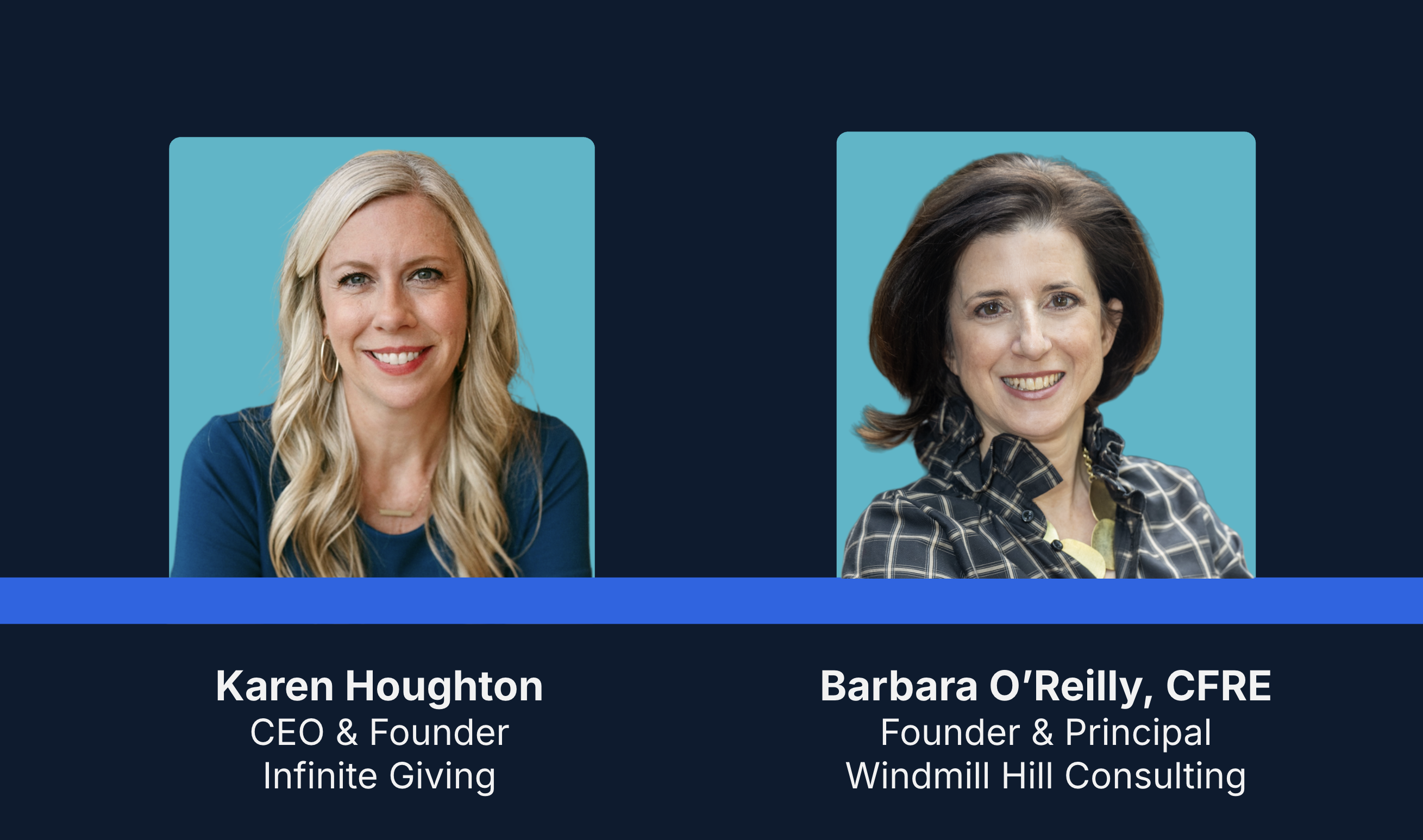
Our CEO & Founder, Karen Houghton will join Brad to give you a plain-language playbook. No jargon. No pressure. Just practical steps your team can put in place this season.