The traditional nonprofit playbook has treated extreme risk aversion as a safety net. This mindset can lead organizations to hold cash in low-yield checking accounts, assuming this conservative approach protects their fundraising revenue and keeps the focus on their mission. However, a strong fundraising stewardship strategy is built on the principle that money and mission are teammates rather than competitors.
When you focus on actively stewarding your nonprofit’s funds with an eye toward the future, you can make progress toward financial sustainability to support your organization’s long-term growth. In this guide, we’ll explore the basics of fundraising stewardship, including:
- What Is Fundraising Stewardship?
- Why Stewardship Is Better Than Scarcity
- How to Steward Your Nonprofit's Funds in 4 Basic Steps
- Key Strategies for Nonprofit Financial Stewardship
- Nonprofit Financial Stewardship FAQs

What Is Fundraising Stewardship?
Fundraising stewardship is the proactive process of managing donated funds to support a nonprofit's mission over the long term. Rather than prioritizing scarcity, nonprofit financial stewardship considers the full range of organizational needs and therefore aims to balance short-term mission fulfillment with long-term financial growth to support your nonprofit’s future.
Financial stewardship strategies can include everything from implementing strong internal controls to investing reserves across different financial vehicles. The goal is to make strategic decisions about cash management that promote sustainability and align your finances with your programmatic goals over time.
Why Stewardship Is Better Than Scarcity
Traditional scarcity mindsets can lead nonprofits to hold cash in low-interest accounts, lose money due to inflation, and neglect planning for their organization’s financial future. Proactive stewardship, on the other hand, empowers your nonprofit to focus on realistic, sustainable growth.
Effective financial stewardship can lead to benefits like:
- Increased financial stability: Stewardship practices like building reserves, investing strategically, and increasing FDIC coverage can help to improve your nonprofit’s financial resilience and better prepare your organization to weather economic changes.
- Diversified revenue streams: Fundraising stewardship encourages your nonprofit to expand its revenue sources, whether that means embracing non-cash asset donations or starting an endowment. This practice contributes to financial sustainability and opens up more avenues for engaging high-capacity donors.
- Improved donor trust: Your supporters want to know that your organization is thinking about the long term and managing its finances accordingly. When you can show donors that your nonprofit prioritizes responsible financial stewardship, they may be more inclined to trust your organization with large donations.
How to Steward Your Nonprofit's Funds in 4 Basic Steps
Fundraising stewardship empowers your nonprofit to get out of survival mode by building structured, long-term financial plans. Follow these foundational steps to get started.
1. Assess your current resources and priorities
First, take stock of your organization’s current financial situation. Evaluate your nonprofit’s:
- Bank and brokerage accounts
- Revenue streams
- Reserves and other strategic funds
- Internal financial controls
- Current investing strategies, if any
- Level of FDIC coverage
- Immediate, mid-term, and long-term financial goals
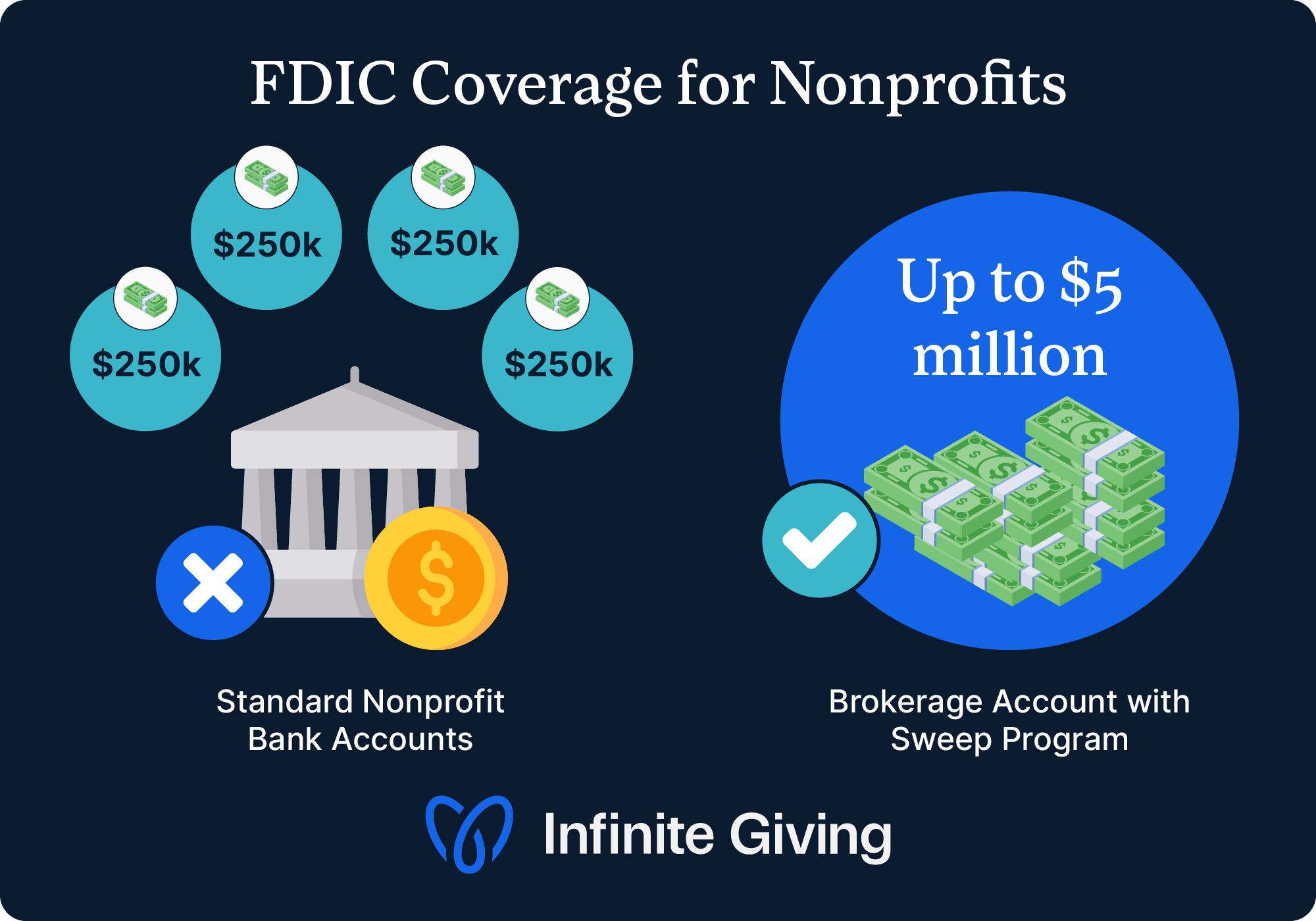
In particular, pay attention to where you keep your organization’s funds and whether your money is fully backed by the U.S. government if a bank fails. Traditional bank accounts cap FDIC coverage at $250,000, meaning that anything above that amount is not insured. This leads many organizations to juggle several accounts across institutions, but that’s not the only option.
Instead of using multiple standard bank accounts, consider using a brokerage account with an FDIC sweep program. These programs spread cash across partner banks to provide up to $5 million in coverage from a single account.
2. Partner with a financial advisor or fiduciary partner
Once you know where you stand and what your goals are, you might seek professional support to help guide your stewardship approach. Nonprofit financial advisors who are RIAs (Registered Investment Advisors) have a fiduciary responsibility to work in your organization’s best interest and know the ins and outs of nonprofit finance.
For example, Infinite Giving is a registered nonprofit investment advisor that partners exclusively with nonprofits to help organizations improve their cash management and move toward financial sustainability.
Consider working with our team of fiduciary partners to get specialized consulting services and access modern technology to support your strategy. Infinite Giving offers investing support, fiduciary oversight, and non-cash gift acceptance tools to help your nonprofit strategically steward its finances.

3. Establish an Investment Policy Statement (IPS)
Before you start investing funds or reorganizing your nonprofit’s accounts, define clear guidelines for fundraising stewardship, starting with an investment policy.
An Investment Policy Statement (IPS) governs financial decision-making and helps protect your organization’s funds from investing decisions that don’t align with your nonprofit’s strategies. Think of it as a financial seatbelt for your cash management efforts. When market volatility strikes, this governing document anchors your leadership team to pre-established risk tolerances and procedures.
Your investment advisor will create this custom document for you and work with your board to align it with your organization’s needs, defining parameters and realistic performance benchmarks tailored to your goals. However, you can get an overview of what these policies typically include by checking out our sample IPS template.
4. Implement a tiered financial strategy
A healthy reserve fund helps to cover unforeseen crises without compromising the rest of your operations, but how you manage these funds matters. To steward each of your nonprofit’s funds appropriately, separate your operating cash from longer-term reserves and endowments with a tiered financial strategy.
This type of strategy involves aligning your cash management strategies with each fund’s purpose and timing to help maintain appropriate levels of liquidity and risk. Here’s an example of what this approach might look like:

- Short-term operating reserves (6-12 months): You might keep rainy day funds in FDIC-insured accounts, money market funds, and short-term treasuries to prioritize their liquidity while still adding to them as you save.
- Mid-term strategic reserves and capital reserves (1-5 years): Mid-term funds may work well in laddered CDs, diversified fixed-income portfolios, or short bond funds that balance liquidity with moderate returns.
- Long-term endowments (Perpetual): Large, restricted endowments are often invested in fully diversified portfolios in accordance with IPS guidelines to maximize long-term growth.
The financial tools and investment strategies you use for each fund will impact its potential for growth and how easily your organization can access it. With a strategy like the example above, you can align timing, risk, liquidity, and purpose.
Key Strategies for Nonprofit Financial Stewardship
Now that you understand the basics, here are some additional tips to help you steward your nonprofit’s funding even more effectively.
Prioritize non-cash asset donations
The 2026 State of Nonprofit Asset Gifts Report highlights that 33% of the total wealth of the U.S. household sector was in stocks at the end of 2025. This number represents a massive reservoir of highly appreciated assets, and tapping into it offers benefits for both nonprofits and donors. When supporters donate non-cash gifts, they can make significantly larger impacts on your mission while potentially sidestepping capital gains tax burdens.
At the same time, your organization can receive larger donations: In 2025, the average stock donation processed by Infinite Giving was over $32,000, and the average cryptocurrency gift was over $11,800.
Before you can prioritize non-cash donations, however, you need the infrastructure to accept the most common types. These channels include:
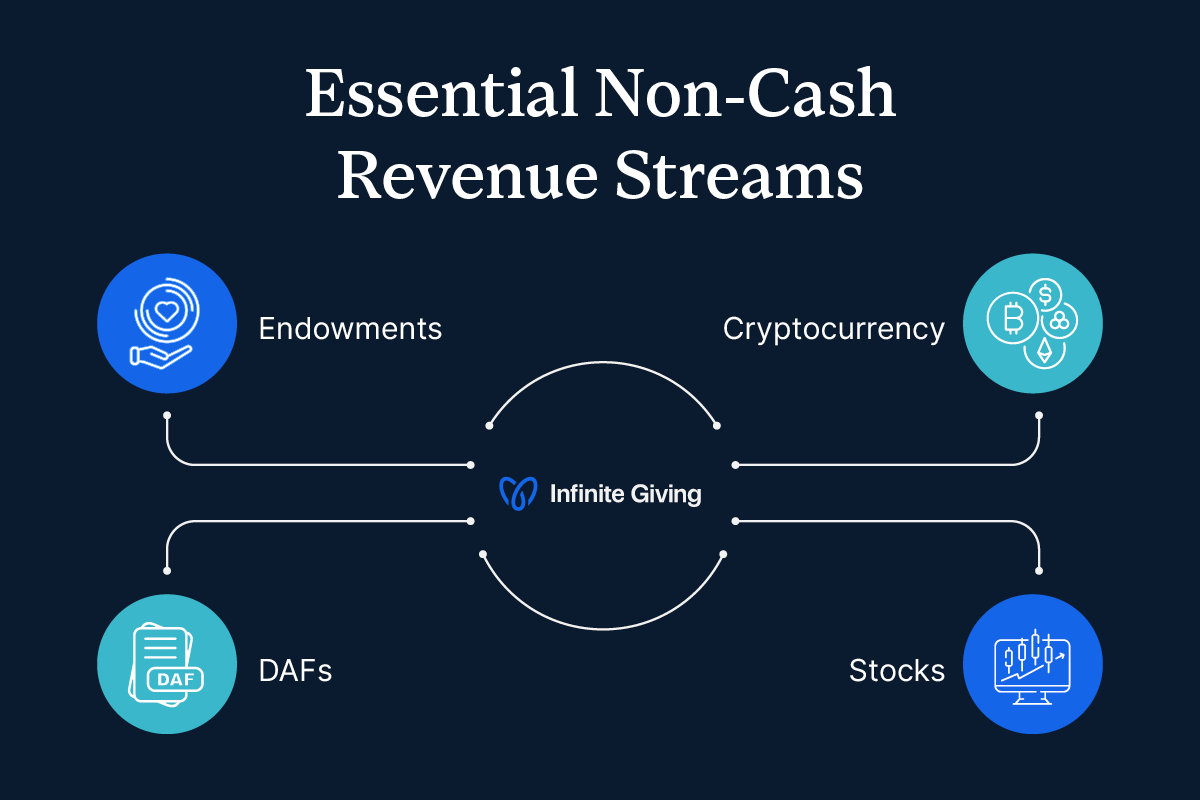
- Endowments
- Cryptocurrency
- Stocks
- Donor-advised funds (DAFs)
Accurately processing and recognizing these donations can be complex, so many organizations opt for specialized tools and fiduciary partners like Infinite Giving. Infinite Giving’s asset donation platform helps nonprofits accept all of these non-cash gifts with 0% fees on stock and DAF donations.
Prepare for the Great Wealth Transfer
Another key trend to pay attention to is the ongoing Great Wealth Transfer. An estimated $124 trillion in generational wealth is set to transfer by 2048, with $18 trillion explicitly earmarked for charity. This means that money is moving to a new group of potential donors, with new priorities and giving habits.
Shifting your focus to non-cash assets can help your organization prepare for the future of fundraising, especially if you factor in tax-efficient legacy gift opportunities like donor-advised funds and qualified charitable distributions (QCDs).
Invest funding strategically
After you raise funds through legacy giving, non-cash assets, and other fundraisers, steward them through appropriate investments according to your tiered financial strategy (discussed above).
With an investment advisor like Infinite Giving, you can get fiduciary support for your investing decisions and monitor all account activity from a modern dashboard.
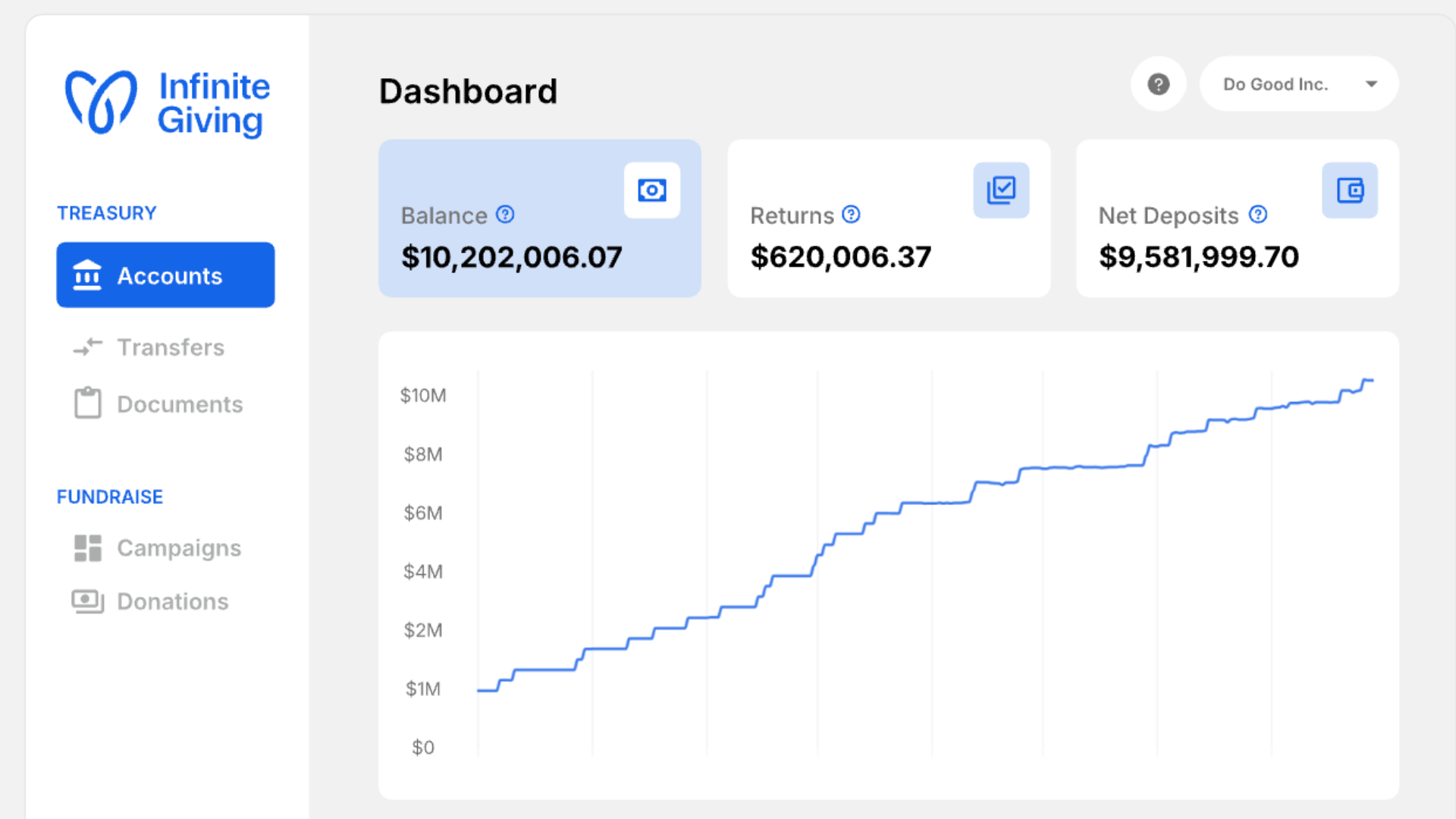
*Sample investment portfolio with example dashboard depicting hypothetical returns. See full Disclosures
Our advisors also provide regular, transparent reports and statements to share with your board of directors. They can even attend board meetings as needed to answer leaders’ questions and discuss cash management strategies. All of this information helps you align your organization’s leadership and speak about the impact of investing to major donors.
.png)
Nonprofit Financial Stewardship FAQs
What is nonprofit financial stewardship?
Nonprofit financial stewardship involves proactively managing donated funds to sustain long-term impact. Organizations use different financial stewardship strategies, but they often include building reserve funds, diversifying revenue, investing reserves, and improving financial policies.
How does inflation impact idle nonprofit cash?
Inflation can quietly erode the purchasing power of idle cash stored in low-interest savings accounts. That’s why many organizations choose to implement tiered financial strategies, using different accounts and investment strategies based on the timing and purpose of dedicated funds.
How can nonprofits prepare for the Great Wealth Transfer?
Nonprofits can prepare for the $124 trillion Great Wealth Transfer by normalizing the acceptance of large asset gifts, such as stocks and DAFs, instead of relying solely on cash donations. You can also develop personalized outreach strategies for younger generations and promote various types of legacy giving opportunities.
Elevate Your Fundraising Stewardship With the Right Support
Implementing a clear strategy for fundraising stewardship can help protect your nonprofit's capital and position your organization for long-term growth. However, what works for another organization may not be the best decision for yours. Get professional, fiduciary insight into your financial decisions by partnering with an advisor like Infinite Giving.
For more information on how and why to steward your organization's funds, check out our other guides on the future of nonprofit finance:
- Financial Sustainability Guide for Nonprofit Organizations. Dive deeper into core strategies for long-term financial sustainability, including asset diversification, mission alignment, and financial oversight.
- Cash Accounts with $5M FDIC Coverage for Nonprofits: FAQs. Have questions about FDIC coverage? Read our FAQ guide and explore how to expand your coverage with an FDIC sweep program.
- Investment Consulting for Nonprofits | Infinite Giving. Learn more about our investment advisory services and discover how we help nonprofits improve their cash management strategies to strengthen stewardship.

*DISCLOSURE
Infinite Giving Advisory Services, Inc. is an SEC registered investment adviser. Advisory services are only offered to clients or prospective clients where Infinite Giving Advisory Services, Inc. and its representatives are properly licensed or exempt from licensure. This content is solely for informational purposes. Past performance is no guarantee of future returns.
Investors’ experiences may vary from the content. Nothing in this presentation constitutes investment advice, performance data, or any recommendation that any particular security, portfolio of securities, transaction, or investment strategy is suitable for any specific person. Any mention of a particular security and related performance data is not a recommendation to buy or sell that security. Infinite Giving manages its clients’ accounts using a variety of investment techniques and strategies, which are not necessarily discussed in the commentary.
Individualized responses to persons that involve either the effecting of transactions in securities, or the rendering of personalized investment advice for compensation, will not be made without registration or exemption. Investing involves risk and possible loss of principal capital. No advice may be rendered by Infinite Giving Advisory Services, Inc. unless a client service agreement is in place. Donation services provided by Infinite Giving Technologies, Inc.